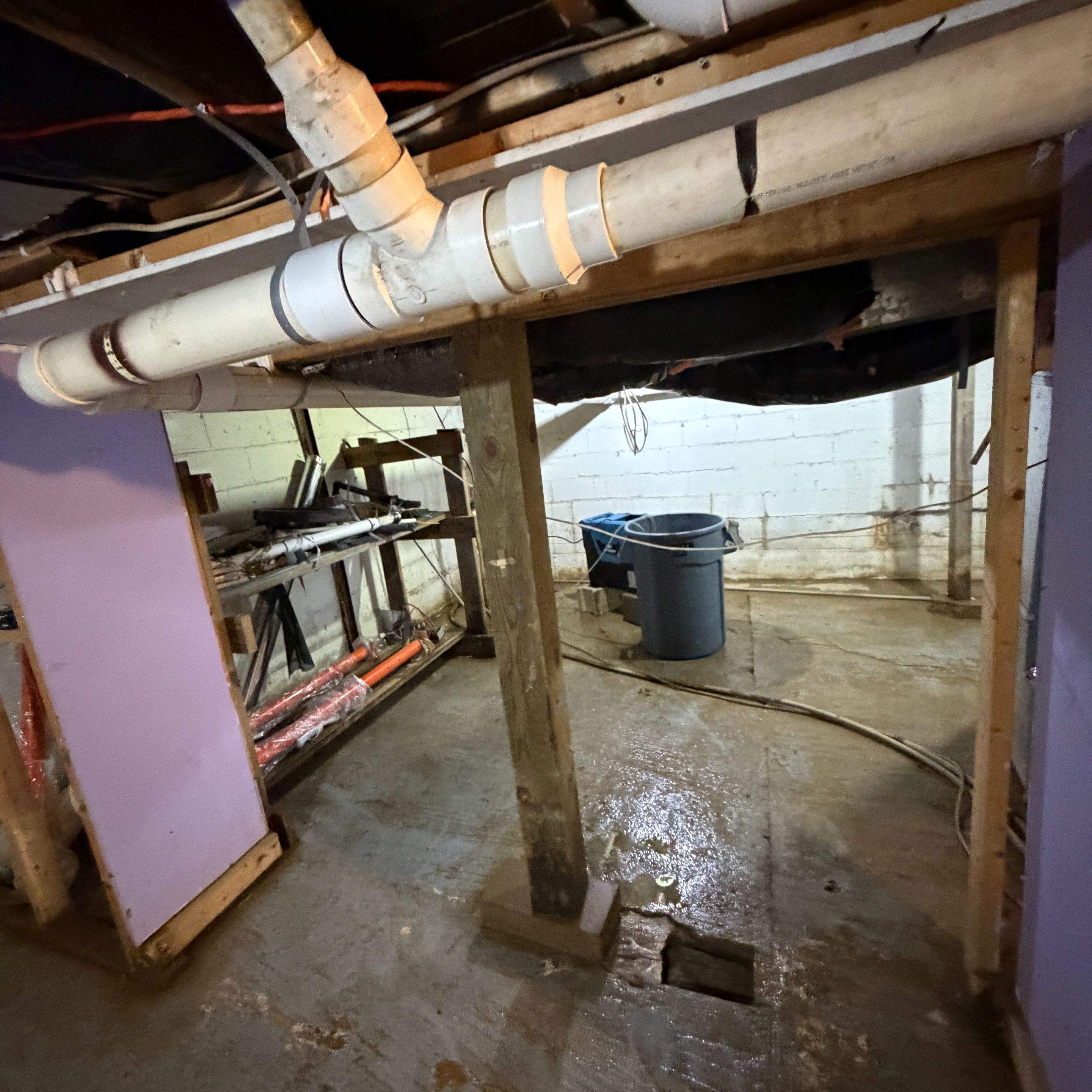
Why Mold Follows Water Damage So Quickly in Gosport Homes
Mold is not a sign that your house is dirty. It is a sign that moisture was present long enough for spores to germinate. The EPA and IICRC S520 standard both reference a 24 to 48 hour window after a water loss before microbial growth becomes likely. In real Gosport conditions, that window is often shorter. A finished basement with carpet pad, drywall touching the slab, and limited airflow can show visible growth in 72 hours. A crawl space with a vapor barrier issue can harbor hidden colonies for months before anyone notices the musty smell drifting up through floor registers.
The category of the original water matters enormously. Clean Category 1 water from a supply line still grows mold once it sits, because it picks up contaminants from flooring, drywall, and dust. Category 2 gray water from a washing machine or dishwasher accelerates growth. Category 3 black water from a sewer backup or ground flooding introduces bacteria and aggressive fungal species that require full containment and disposal of porous materials. If you are still in the active water phase, the response steps in our water damage restoration cost and 24/7 emergency service guide will help you stop the clock before mold even enters the picture.
Central Indiana's climate compounds the problem. Summer dew points routinely sit in the upper 60s and low 70s, which means any cool basement surface becomes a condensation target even without an active leak. Winter brings the opposite issue, where warm humid indoor air meets cold rim joists and creates frost that melts into framing the moment temperatures swing. Gosport Water Restoration sees a noticeable spike in mold calls during the freeze-thaw weeks of February and March, when homeowners finally notice staining that has been developing quietly since the previous fall.
The Comparison That Actually Drives Your Decisions
The table below is the core of this post. It maps the four conditions we see most often in Gosport mold jobs against what removal looks like, what prevention looks like, and what you should reasonably expect to spend. These ranges reflect Central Indiana pricing as of recent project files, not national averages that get distorted by coastal markets.
| Scenario | Typical Mold Onset | Removal Scope | Containment Level | Prevention Strategy | Typical Cost Range |
|---|---|---|---|---|---|
| Small Category 1 leak under sink, caught in 48 hours | Light surface growth on cabinet base, possible drywall wicking | Cabinet removal, antimicrobial treatment, 2 to 4 feet of drywall replaced | Limited, plastic sheeting and a HEPA air scrubber | Fix supply line, add a leak detector, monitor humidity under 50% | $600 to $2,200 |
| Category 2 washing machine overflow, 5 to 7 days unaddressed | Visible growth on baseboards, behind drywall, on tack strip | Carpet and pad removal, drywall cut to 24 inches, framing cleaned | Moderate, sealed containment zone with negative air | Replace supply hoses every 5 years, install drain pan, dehumidify | $2,500 to $6,500 |
| Basement flood, Category 2 or 3, several days standing | Heavy growth on drywall, insulation, stored items, sometimes joists | Full demolition to studs, contents triage, structural cleaning | Full IICRC S520 containment, PPE, post-remediation verification | Sump pump with battery backup, exterior grading, interior drain tile | $5,000 to $18,000 |
| Crawl space moisture, chronic, discovered months later | Diffuse growth on joists, subfloor, and vapor barrier | Manual cleaning of framing, encapsulation, possible insulation removal | Moderate to full, depending on square footage and species found | Encapsulation system, dehumidifier rated for crawl conditions | $3,500 to $12,000 |
Read across any row and the logic becomes clear. The cost of remediation is driven primarily by how long moisture was present and what materials it touched, not by the size of the original leak. A pinhole pipe leak that ran for two weeks behind a wall can cost more to remediate than a dramatic basement flood that was extracted within hours. That is why early intervention, even if it feels expensive at the time, almost always saves money. Our water damage behind walls and hidden leak detection resource covers the diagnostic side of catching slow leaks before they reach the bottom row of that table.
The table also reveals something insurance adjusters understand well. Containment level scales faster than removal scope, because protecting the rest of the home from cross-contamination during demolition is where most of the labor hours actually live. A job that requires negative air machines, decontamination chambers, and daily air monitoring will carry a different price tag than one that needs a single scrubber, even if the visible damage looks similar to a homeowner walking through.
What Removal Actually Involves
Real mold remediation is not spraying bleach on a wall. The IICRC S520 process starts with assessment, then containment, then source control, then removal of unsalvageable porous materials, then HEPA vacuuming and damp wiping of remaining surfaces, then drying to below 16% moisture content, and finally verification. Skipping any step is how homeowners end up calling us six months later with the same problem in the same room. For commercial property managers in Gosport, the stakes are higher because of tenant health concerns and liability, which is why we offer a dedicated commercial mold remediation service with documentation suitable for insurance and legal review.
Verification deserves a closer look because it is the step most often skipped by budget contractors. Post-remediation verification involves visual inspection by an independent party, moisture readings across the affected assembly, and in many cases air sampling compared against an outdoor control. Without those numbers on paper, you have no proof the job was done correctly, which becomes a real problem at resale when a buyer's inspector finds elevated spore counts and asks for documentation you never received.
Prevention That Holds Up in Central Indiana
Prevention is about controlling the three inputs mold needs. You cannot eliminate spores, and you cannot easily change the food sources built into your house, so moisture is the lever. Keep relative humidity between 30 and 50 percent year round. Run a dehumidifier in basements and crawl spaces, not just in summer. Inspect supply lines on washing machines, dishwashers, refrigerators, and water heaters annually. Grade soil away from the foundation. Clean gutters so downspouts are not dumping water against the wall. These steps sound simple because they are, and they prevent the majority of the jobs Gosport Water Restoration gets called to handle.